10 Best Martial Arts Games on PC Right Now
Martial arts combat can reward reading an opponent or memorising a sequence, and most games quietly pick one. This list ranks ten PC games on which side of that line they fall, including one that is really a rhythm game wearing a sword, one that turns fights into a deck you build yourself, and one where the environment is the move list.
Every martial arts game on PC claims to be about skill. What they usually mean is memory: a fixed sequence, executed under pressure, repeated until it is automatic. That is a legitimate pleasure. It is not the same pleasure as reading an opponent, and the difference is the only criterion that really matters once you have played a few of these.
What the ranking measures
Reading versus memorising. Can you win a fight you have never seen before by watching the enemy's shoulders? Or does victory depend on having drilled the correct answer?
Legibility of the art. If the style is only a costume and a particle colour, it does not count. Stances, weight and reach should carry information.
Cost of a mistake. A game where errors compound forces you to fight carefully; a game where errors are free is a power fantasy with a combo counter.
The ten at a glance
| Rank | Game | Core idea | Who it suits |
|---|---|---|---|
| 1 | Sekiro | Deflect rhythm, posture break | Players who like timing |
| 2 | Sifu | Parry, age, one life | Players who like pressure |
| 3 | Absolver | Build your own deck | System tinkerers |
| 4 | Black Myth: Wukong | Stances, focus, staff range | Boss-rush players |
| 5 | Ghost of Tsushima | Four stances, one read | Players who like clarity |
| 6 | Nioh 2 | Three stances, ki pulse | Optimisers |
| 7 | Wo Long | Morale, deflect, phases | Deflect veterans |
| 8 | For Honor | Directional guard, feints | Duelists |
| 9 | Sleeping Dogs | Counters and furniture | Brawler fans |
| 10 | Midnight Fight Express | Short levels, flow combos | Commuter sessions |
1 to 10, with the reason
1. Sekiro: Shadows Die Twice
It is a rhythm game wearing a sword. Deflecting is timing, posture is the health bar, and every boss is a song you learn by dying to it. The reason it tops the list is that the rhythm is readable: the enemy's swing tells you the beat before you have to answer it. Sekiro rewards attention, not recall. Learn the beat and a fight opens up; flinch and it closes again.
2. Sifu
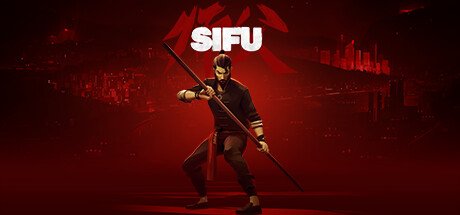
Hand-to-hand combat with a parry window you can feel and a death system that ages you every time you fail. Because the camera stays close and the enemies telegraph, Sifu turns a crowd fight into a sequence of individual reads. The age counter makes every mistake permanent enough to hurt, which is exactly the pressure the combat needs. A bad run costs minutes rather than hours, so the pressure never becomes resentment.
3. Absolver
The only game here where you author your own style. You assemble strikes across four stances into a deck, then discover in a duel whether the route survives contact. Absolver is rougher, emptier and smaller than everything above it, and it is the only one that answers the question the genre keeps asking about what a martial art actually is.
4. Black Myth: Wukong
Staff combat with three stances and a focus system that rewards charging rather than spamming. The stances change range and mobility rather than damage, so switching is a positioning decision. Wukong is closer to memorisation than the top three, but its best bosses still ask you to watch rather than recite. The stretches between them are thinner than the fights deserve.
5. Ghost of Tsushima
Four stances mapped to four enemy types, and a switch delay that punishes guessing. The system is elegant and slightly too forgiving, since ghost weapons let you skip the puzzle. Still, this one has the cleanest visual language of any sword game on PC: you can read the whole fight from the silhouette. The duels, with no grass and no gadgets, are the best thing in it.
6. Nioh 2
Three stances, a ki pulse you have to manage, and a loot system that keeps pulling you toward optimisation. The combat is superb and the surrounding game is a spreadsheet. Nioh 2 rewards mastery of its own systems more than it rewards reading a specific opponent, which is why it sits below the top five. If planning a build between fights sounds like a feature, add ten hours.
7. Wo Long: Fallen Dynasty
A morale rank that rises as you fight and falls when you die, plus a deflect that replaces most of your defence. The elemental phases give fights a rock-paper-scissors layer on top of the timing. It is a good game that suffers from comparison: everything it does, Sekiro does with fewer systems in the way. Its best bosses still feel like a conversation rather than a recital.
8. For Honor
Directional guard, guard breaks and feints, all resolved in a duel with no combos to hide behind. For Honor is the closest thing PC has to a fighting game with swords, and its problem is the opposite of the others: the reading is excellent and everything around it, from progression to matchmaking, is noise. Play it for the duel and ignore the rest.
9. Sleeping Dogs
A brawler where the environment is the move list. Counters open into contextual finishers involving car doors, air conditioners and market stalls. It is the least technical game here and the one with the best sense of place, and its counter timing is a better teacher than most tutorials. It is also the only game on this list where a fight can end with a fridge.
10. Midnight Fight Express
Short levels, fast restarts and a combo system that rewards flow over precision. It is the game on this list you can finish in pieces, and the only one designed around a twenty-minute session. Lower placement reflects depth, not quality: the ceiling is high, but the floor is very forgiving, and a beginner looks competent inside an hour, which is not something the top half of this list can promise.
Where to start if you have never played one
Start with Ghost of Tsushima on Hard, because it will teach you to identify a weapon before you have to react to it. Then play Sekiro, which will take that habit and remove every safety net around it. Doing it the other way round usually ends with the second game feeling unfair rather than difficult. Our other ranked lists cover the browser side of the same question.
Frequently asked questions
Which martial arts game is hardest on PC?
Sekiro, because it removes the options that make the others manageable: no build variety to out-scale a boss, no summoning, no difficulty setting. Sifu is close, but its age system gives you a way to measure decline rather than a wall to stop at.
Is Black Myth: Wukong a martial arts game?
It is a staff-fighting action RPG rooted in Chinese mythology rather than a martial arts simulation. The stances and focus points create the same read-and-commit rhythm, so it belongs on the list even though its combat is broader and more forgiving.
Do I need to play Nioh 1 before Nioh 2?
No. Nioh 2 is a prequel with its own character creation, and its combat systems are expanded rather than continued. Starting with the second game means learning the ki pulse and the three stances without unlearning the first game's habits.