Hades: Why the Loop Beats the Story
Hades is sold as a story about escaping the underworld, but the writing is delivered by the run structure rather than wrapped around it. Boons, keepsakes and the Pact of Punishment are narrative devices wearing mechanical clothes, and every death is a scene transition. Where that design sings, where the seams start to show, and who should stay away entirely.
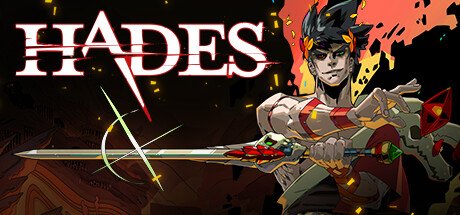
Zagreus dies in the first minute of Hades and keeps dying for the next thirty hours, and the game is built so that each death works as a scene transition rather than a failure state. The house resets, the queue of shades shuffles, and somebody new has something to say about the last attempt. Most roguelites treat narrative as a reward bolted onto a run. This one treats the run as the delivery mechanism.
Death is a scene transition
Walk back into the House of Hades and the first thing you pass is the counter where Hypnos guesses, badly, how you died. It is a joke the first time and a small ritual by the twentieth. That is the pattern: the game converts repetition into familiarity, and familiarity into character. The Olympians who hand out boons do not get cutscenes about their family. They get voice lines that change because you have taken their gift nine times.
That is why the loop beats the plot. The plot is a fixed sequence of reveals about Persephone, and it would work in any medium. The loop is the part that could only be a game.
Boons are the plot
Every run is assembled from four or five gods, and which ones show up changes what the characters say to you. Take Zeus early and he becomes generous and loud. Take Poseidon and the tone shifts. Duo boons, which need two specific gods at once, are the closest thing the game has to a twist: they only appear when your build accidentally lines up with two Olympians who have something to say to each other.
Weapon aspects do the same work on the other side of the screen. Spending Titan Blood to unlock the Arthur aspect of the sword or the Rama aspect of the bow is not a stat upgrade. It is a different weapon with a different rhythm, and the writing acknowledges that you are carrying something old and strange.
Nectar and keepsakes handle the quiet half of the system. Giving a character a bottle unlocks a keepsake you can carry into a run, which turns a relationship into a loadout slot. It is a small trick, but it means the social layer and the mechanical layer are the same layer.
Heat turns the story into a system
After your first clear, the Pact of Punishment opens and Hades starts negotiating. Each point of Heat is a condition you choose: enemies hit harder, bosses gain phases, time limits tighten. Because you set the terms, the difficulty curve becomes a conversation with the antagonist instead of a slider in a menu.
Nothing else in the genre does this as cleanly. In most roguelites, higher difficulty is the same run with bigger numbers, and the fiction never notices. Here the fiction is the difficulty menu.
The Mirror of Night does the quieter version of the same job. Darkness buys permanent upgrades between runs, and because you can respec the mirror for a key, the game treats your build as a hypothesis rather than a commitment. Nothing is wasted, which is exactly the promise a loop-based story needs to make.
Where the repetition shows
Asphodel is the weak link. The raft sections are visually flat, and the room shapes repeat in a way Tartarus mostly avoids, so the second biome is where "one more run" momentum usually dies. Elysium recovers with the Theseus and Asterius fight, which is the best-designed encounter in the game and the one that rewards learning a pattern rather than out-scaling it.
The dialogue pool thins as well. Clear the game a dozen times and the Olympians have run out of remarks about your weapon, so the game starts recycling lines with slightly different delivery. It is graceful, but you notice.
By contrast, Dead Island 2 is the opposite arrangement: a long campaign that rarely asks you to repeat anything, which means it never has to solve this problem and never gets the payoff either.
Who it lands for
- Play it if you like builds more than reflexes, and if a failed run still feels like progress.
- Play it if you want a roguelite you can actually finish. The first clear is reachable without grinding, which is not true of most of its peers.
- Skip it if you need combat that reads like a fighting game. The hitboxes are generous, and the challenge sits in positioning and resource choice rather than execution.
- Skip it if you bounce off repetition. Thirty hours of four biomes is the deal, and the writing only partly hides it.
If you want the opposite trade, a short linear game where every room is authored once, Katana ZERO makes a similar argument in five hours and never repeats a screen. Our other reviews cover a few more games with strong opinions about length.
Turn the Heat to one before deciding the game has nothing left. Most people who quit did it at zero, where the Pact is still locked and the loop has no teeth.
Frequently asked questions
How long is Hades before the first clear?
Most players need somewhere between twenty and thirty runs, which works out to roughly ten to fifteen hours. Skilled action players get there sooner, and the game does not require you to master every biome before a win is possible. {{G:hades|Hades}} is unusually generous about that first clear.
What does the Pact of Punishment actually change?
It adds optional difficulty conditions, each worth a point of Heat. You pick them yourself, and the rewards scale with your total. Because you set the terms, you can push the parts of the game you are good at and leave the parts you dislike untouched.
Is Hades a roguelike or a roguelite?
It is a roguelite. Runs reset, but permanent upgrades, weapon aspects and story progress all carry over. That persistent layer is why the narrative can advance at all, since the game assumes you will die repeatedly and builds its plot around that assumption.