Katana ZERO: Five Hours That Respect You
Every room in Katana ZERO is a puzzle you are expected to fail, and the restart arrives faster than the mistake does. The story comes in fragments through a psychiatrist's office, the time-slow meter rewards aggression over caution, and the whole thing ends before it can wear out. A short game that treats its length as a design decision rather than an apology.
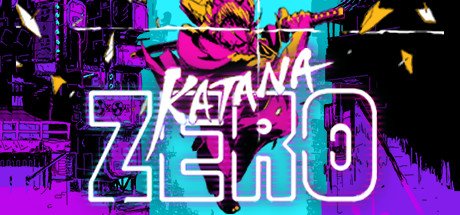
The first room of Katana ZERO kills you in about four seconds. A guard turns, a shotgun fires, and the screen cuts to black before the sound finishes. Then you are back at the door, and the whole thing took less time than reading this sentence. That restart speed is not a convenience feature. It is the game.
A room is a sentence you rewrite
Each screen is a small authored problem: two guards on a platform, one with a shield, a camera that calls a third. You carry a sword that kills in one hit and a body that dies in one hit, so there is no attrition and no healing. The only variable is the order you do things in.
Because death is instant and retry is instant, failure stops feeling like punishment and starts feeling like editing. You try a route, it breaks at the third guard, you cut a different corner. Within ten minutes you are thinking in terms of "the version where I deflect first", which is a very different mental state from "I need to be more careful".
The design only holds because the levels are short. A five-minute checkpoint would turn the same deaths into tedium. Ghostrunner runs a similar one-hit structure with longer gaps between checkpoints, and the difference in patience required is enormous.
Slow motion is punctuation
Time slows when you hold the button, and the game is careful about what that buys you. It does not make you invincible. It gives you a window to deflect a bullet, reposition, or throw something at a guard's head so the next two shots miss. Because the meter refills only on kills, the ability rewards aggression rather than panic.
That inverted economy is the smartest thing in the combat. New players hoard the slowdown and die with a full meter. Players who understand it open every room by spending it. Watch a good run and the slowdown is on more often than it is off, which looks reckless until you notice that every kill is buying the next second.
The story arrives in fragments
Between missions, Zero sits in a psychiatrist's office and talks. The dialogue options are not branching paths in any meaningful sense, but they are not decoration either: they set the temperature of the relationship, and the game remembers which version of Zero you are playing. Lie to the doctor and the sessions get colder. Tell the truth and he pushes harder.
Everything else arrives the same way. There are no exposition dumps and no codex. You get a hotel corridor, a phone call, a news broadcast in the background, and you assemble the plot yourself. Some players find that evasive. It is more accurate to say the game trusts you to keep up, which is rare enough to be worth noting. The fragments are placed with care: a name you hear twice, a photograph, a line from the doctor that lands differently on the second playthrough.
The neo-noir dressing does real work here. The rain, the neon, the synth soundtrack and the grim one-liners are all genre furniture, but they give the fragments a tone to hang on. When a scene finally explains something, it lands because the style has been promising a revelation for two hours.
Five hours is the design, not the budget
Katana ZERO ends before it repeats a single room. There is no wave mode, no procedural content, no second act built from reused assets. What you get is a run of hand-built levels, a boss that tests everything, and an ending that stops mid-sentence on purpose.
- One-hit kills in both directions, so every room is solved rather than survived.
- Instant retry, which converts frustration into iteration.
- Dialogue sessions that carry the plot without a single cutscene longer than a minute.
- An ending that arrives before the combat has run out of ideas.
That choice has a cost. If the combat does not click, five hours is still five hours and there is nothing else to do. If you replay for speed, the game is short enough that one mistake costs an entire run you can finish in an evening, which is either the appeal or the problem depending on your temperament.
Who should skip it
Skip it if you need a game to justify its price in hours. Skip it if you want a story that resolves cleanly, because this one does not. Skip it if you dislike trial and error, since the whole structure is trial and error with the friction removed.
Play it if you liked Katana ZERO when it first appeared and want to know whether the trick still holds, or if Ghostrunner appealed but needed closer checkpoints, or if you have ever replayed an encounter just to see whether a cleaner version exists. Then run the first level twice: once with the route you found, once with the route the game clearly intended. The gap between the two is the design. We have more reviews of short games if five hours sounds like the right size.
Soalan lazim
How long does Katana ZERO take to beat?
Around four to six hours for a first playthrough, depending on how many rooms you have to retry. There is no filler, no side content and no padding between missions, so the number stays consistent across players of very different skill levels.
Can you beat Katana ZERO without using slow motion?
Not comfortably. The meter refills on kills, and several rooms put bullets in the air before you have a clean line on anyone, so the slowdown is part of the intended solution rather than a crutch. Skilled players use it more often, not less.
Do the dialogue choices change the ending?
They change the tone of the sessions and a few later scenes, but they do not branch the plot into separate endings. Pick the answers that fit the version of Zero you want to play rather than hunting for a hidden route that is not there.